Hybrid Solar Inverters: The Ultimate Guide to Multi-Mode Power
The global energy landscape is currently defined by a fundamental tension between centralized grid reliability and the localized push for autonomy. For decades, residential and commercial solar installations operated on a binary: they were either grid-tied, essentially acting as supplementary power plants for the utility, or off-grid, requiring massive, complex battery banks and specialized equipment. Hybrid Solar Inverters. The emergence of sophisticated power electronics has collapsed this binary, giving rise to an integrated solution that serves as the central nervous system for modern energy management.
This technological convergence is best exemplified by the move toward integrated “Hybrid Solar Inverters.” While early adopters had to cobble together separate inverters for PV arrays and battery chargers—often leading to efficiency losses through multiple DC-to-AC conversions—the modern iteration handles these tasks within a single, unified chassis. This evolution is not merely a convenience of form factor; it represents a shift toward dynamic, software-defined energy routing that can respond to fluctuating utility rates, weather patterns, and local load demands in real-time.
As we look toward 2026 and beyond, the role of these devices has expanded from simple current conversion to high-level orchestration. They are now tasked with managing complex interactions between high-voltage DC strings, various battery chemistries (from traditional Lithium-Iron Phosphate to emerging solid-state options), and the alternating current requirements of the home. Understanding the nuances of this technology requires moving past surface-level specifications to examine the underlying logic of power flow, thermal management, and regulatory compliance that defines a truly resilient system.
Understanding “Hybrid Solar Inverters”
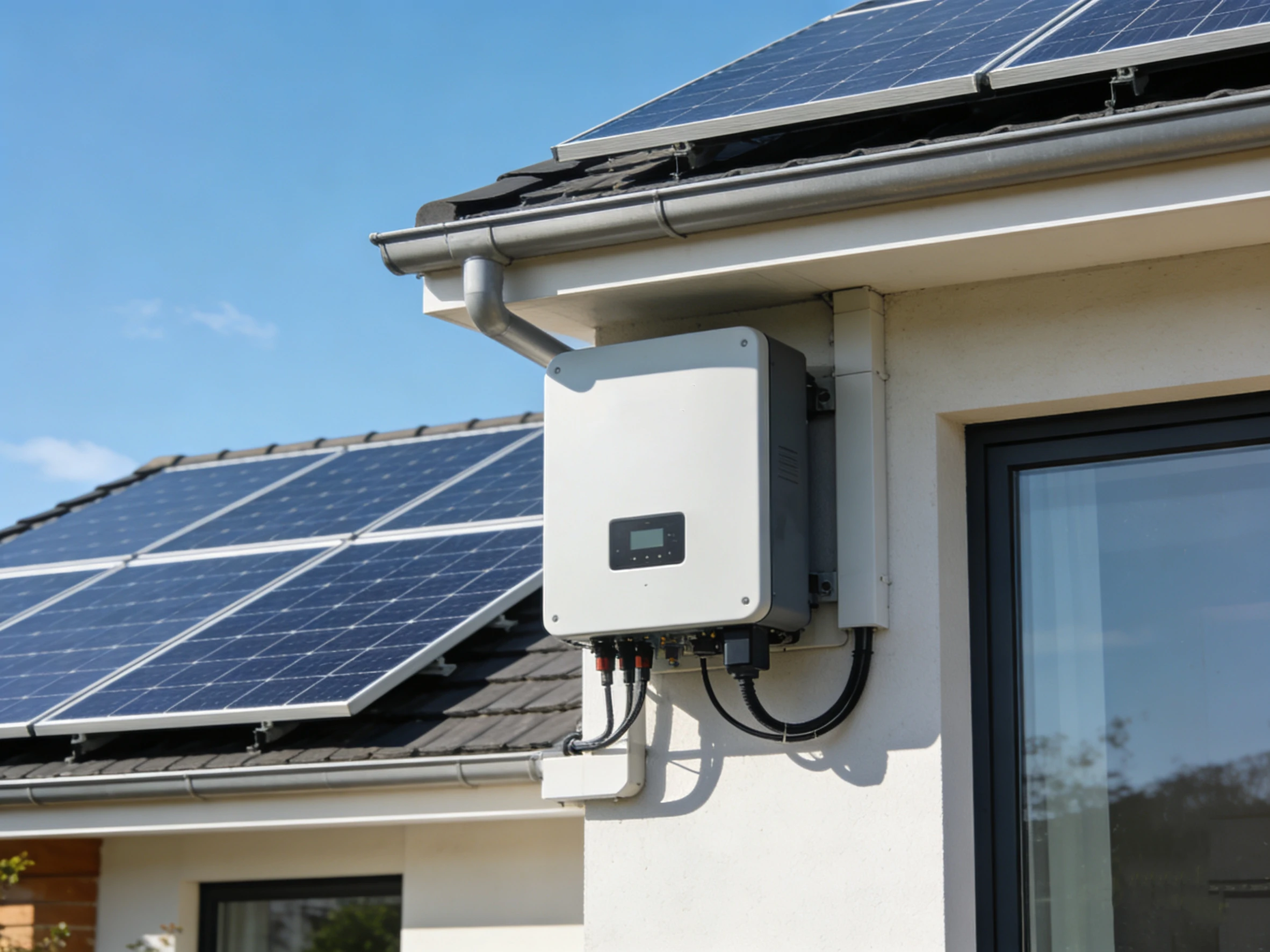
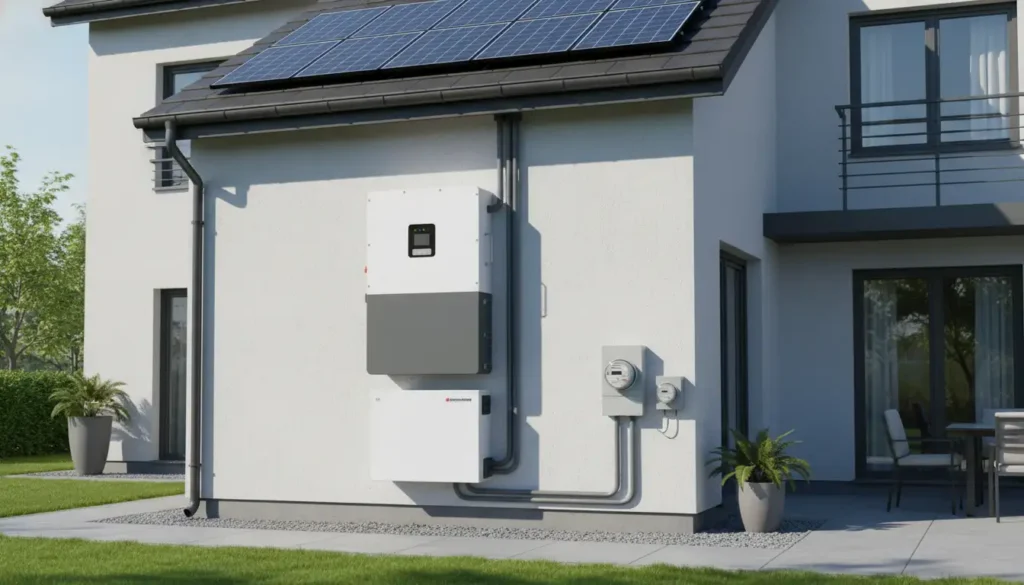
At its core, a hybrid inverter is a multi-mode power conversion unit capable of managing electricity from solar panels, battery storage, and the utility grid simultaneously. Unlike a standard string inverter, which can only convert DC to AC for immediate consumption or export, the hybrid model incorporates a bidirectional DC-to-DC converter for battery interaction. This allows for “AC coupling” or “DC coupling” within a single device, though most modern high-efficiency hybrids prioritize DC coupling to minimize conversion losses.
A significant misunderstanding in the market is the conflation of “hybrid” with “off-grid capable.” While many “Hybrid Solar Inverters” can operate in an islanded mode during a grid outage, not all are designed for indefinite off-grid use. Some require a specific “black start” capability to reboot from a dead battery using only solar power—a feature that is often an optional add-on rather than a standard function. Furthermore, the “pass-through” capacity—the amount of power the inverter can draw from the grid to feed household loads beyond its own conversion limit—varies wildly between models, often becoming a bottleneck for larger homes.
The oversimplification risk lies in viewing the inverter as a standalone appliance. In reality, it is a component that is only as effective as its communication with the Battery Management System (BMS). A hybrid inverter doesn’t just “send power” to a battery; it engages in a constant, millisecond-by-millisecond handshake with the battery’s internal logic to ensure voltage stability and thermal safety. Without this deep integration, the system is essentially a collection of high-voltage parts lacking a cohesive strategy.
Deep Contextual Background
The lineage of hybrid power electronics can be traced back to the telecommunications and maritime industries, where “uninterruptible power” was a necessity rather than a luxury. In those contexts, inverters were rugged, heavy, and extremely expensive. The systemic evolution into the residential sector was catalyzed by two primary factors: the plummeting cost of lithium-ion storage and the widespread implementation of Time-of-Use (TOU) utility pricing.
In the early 2010s, “string inverters” dominated. They were reliable but “dumb”—if the grid went down, they shut down to prevent back-feeding, leaving homeowners with dark houses despite having sun on their roofs. The “storage-ready” movement followed, offering inverters that could be upgraded later. By the early 2020s, the “All-in-One” hybrid became the industry standard for new installations. This shift moved the complexity from the field—where installers had to wire multiple boxes—to the factory, where integrated software could handle the heavy lifting of energy arbitrage.
Conceptual Frameworks and Mental Models
To grasp the operational logic of these systems, one can use the following frameworks:
-
The Energy Reservoir Model: View the grid as an infinite but expensive reservoir, the battery as a finite, local reservoir, and the solar array as a seasonal spring. The hybrid inverter acts as the sluice gate, deciding which reservoir to draw from based on the “cost of the drop.”
-
Conversion Penalty Theory: Every time electricity changes form (DC to AC, or Voltage A to Voltage B), a “tax” is paid in the form of heat. Hybrid systems are designed to minimize the number of times this tax is paid by keeping energy in DC form as long as possible before it hits the home’s appliances.
-
The Load-Shedding Hierarchy: In a crisis, not all circuits are equal. The hybrid inverter’s logic must prioritize “critical loads” (refrigeration, medical devices, basic lighting) over “luxury loads” (electric vehicle charging, pool pumps). This requires a mental model of the home as a tiered ecosystem rather than a single electrical point.
Key Categories and Variations
The hybrid market is segmented primarily by the voltage of the battery interface and the phase of the AC output.
| Category | Battery Voltage | Best Use Case | Primary Trade-off |
| Low-Voltage (LV) Hybrid | 48V | Retrofits, DIY, smaller arrays | Higher current requires thicker, expensive cabling |
| High-Voltage (HV) Hybrid | 150V – 600V | High-efficiency new builds | Proprietary battery requirements; higher risk during install |
| Single-Phase Hybrid | 120V/240V | Standard North American residential | Potential for phase imbalance in larger homes |
| Three-Phase Hybrid | 208V/480V | Commercial & Industrial (C&I) | Higher idle power consumption; complex wiring |
| AC-Coupled Hybrid | N/A (Internal) | Existing solar system upgrades | Double-conversion losses (AC-DC-AC) |
Realistic Decision Logic
The choice between LV and HV systems often comes down to the “round-trip efficiency” goal. High-voltage hybrids generally offer 2-4% better efficiency because the battery voltage more closely matches the PV string voltage, reducing the workload on the internal transformers. However, low-voltage systems remain the “gold standard” for modularity and the ability to mix-and-match battery brands.
Detailed Real-World Scenarios Hybrid Solar Inverters
The TOU Arbitrageur
In a region with high peak-hour electricity costs (e.g., California or parts of Europe), the hybrid inverter is programmed for “Self-Consumption.” During the day, it ignores the grid, charging the battery with excess solar. At 5:00 PM, when rates triple, it switches to “Discharge Mode,” powering the home from the battery. The second-order effect here is the reduction of stress on the local utility transformer.
The Critical Backup
In an area prone to grid instability, the inverter is set to “Backup Priority.” It maintains the battery at 100% at all times, even if it has to pull from the grid to do so. The constraint here is “Switchover Time.” High-end hybrids can transition in under 10 milliseconds—so fast that a desktop computer won’t even reboot—while cheaper units may take 2 seconds, which is a lifetime for sensitive electronics.
The EV-Integrated Home
Modern hybrids are starting to incorporate EV charging directly into the DC bus. This allows solar energy to go straight into the car without ever becoming AC, avoiding the 10% loss typically found in standard EV chargers. The failure mode here is “Max Continuous Output”—if the car draws 7kW and the kitchen is active, the inverter might hit its thermal limit and throttle performance.
Planning, Cost, and Resource Dynamics
The financial commitment for “Hybrid Solar Inverters” involves more than the sticker price. One must account for the “Balance of System” (BOS) costs that hybrids necessitate.
| Cost Element | Estimated Range (USD) | Variability Factors |
| Hybrid Inverter Unit | $2,500 – $6,500 | Power rating (kW), surge capacity, brand |
| Critical Loads Sub-panel | $500 – $1,500 | Number of circuits, labor rates |
| Smart Meter/Gateway | $300 – $800 | Communication protocol (RS485 vs. WiFi) |
| Battery Communication Cable | $50 – $200 | Shielding requirements, length |
Opportunity Cost: Choosing a non-hybrid inverter today to save $1,000 may cost $3,000 in labor and extra hardware later when battery storage becomes a necessity. This “future-proofing” is a primary driver in the current market.
Tools, Strategies, and Support Systems
-
Modbus/CANbus Diagnostics: The ability to “listen” to the inverter’s internal communication is vital for troubleshooting intermittent battery faults.
-
Thermal Imaging: Checking the inverter’s cooling fins and terminal blocks under full load to identify “loose-wire” heat signatures before they cause failure.
-
Cloud-Based Fleet Management: For installers, the ability to push firmware updates to a thousand inverters simultaneously is a massive operational advantage.
-
Dry Contact Relays: Many hybrids include programmable relays to trigger external devices (like a generator or a water heater) when specific battery levels are reached.
-
Rapid Shutdown Devices (RSD): A safety requirement that must be perfectly synced with the hybrid’s logic to ensure the roof is “dead” the moment the grid or battery is disconnected.
Risk Landscape and Failure Modes
The primary risk in hybrid systems is Firmware Instability. Because these devices are essentially high-power computers, a bug in the code can lead to “phantom drains” where the battery is emptied overnight for no apparent reason.
Compounding Risks:
-
Thermal Throttling: If installed in a poorly ventilated garage, a hybrid inverter will reduce its output to protect its capacitors. This often happens right when the homeowner needs it most—during a hot summer afternoon.
-
Electrolytic Capacitor Aging: The “Achilles heel” of all inverters. Heat and high-frequency switching eventually dry out the capacitors, leading to “dirty” AC power that can damage household appliances.
-
Zoning/Gird-Code Mismatch: If an inverter is not correctly configured for the local utility’s frequency and voltage tolerances, it will constantly “drop the grid,” leading to unnecessary battery cycling and shortened lifespan.
Governance, Maintenance, and Long-Term Adaptation
A hybrid system requires a “Review and Adjust” cycle that mirrors corporate IT governance.
-
Quarterly Review: Check the “Yield vs. Consumption” report. Is the system still meeting the household’s needs, or have new appliances shifted the load profile?
-
Annual Physical Check: Clean dust from heat sinks; verify that no rodents have chewed through the high-voltage DC insulation.
-
Five-Year Strategy: Evaluate battery health. If the SoH (State of Health) has dropped below 80%, consider adjusting the depth of discharge (DoD) settings in the inverter to extend the remaining life.
Measurement, Tracking, and Evaluation
Performance tracking should be split into Direct and Derived metrics.
-
Leading Indicators: Heatsink temperature under load; MPPT (Maximum Power Point Tracking) efficiency during variable cloud cover.
-
Lagging Indicators: Round-trip efficiency (how much energy came out of the battery vs. how much went in); total grid offset percentage.
Documentation Examples:
-
Event Log: “Grid Voltage Out of Range” – suggests the local utility has infrastructure issues that may require a narrower inverter tolerance setting.
-
Daily Cycles: A graph showing the battery reaching 100% and dipping to 20%. If it never reaches 100%, the PV array is undersized for the inverter’s capacity.
Common Misconceptions and Oversimplifications
-
“Bigger is always better”: An oversized hybrid inverter has a higher “tare loss” (idle power consumption). If you use a 15kW inverter for a 2kW load, you are wasting energy just keeping the inverter’s brain alive.
-
“They are silent”: While fanless models exist, most high-power hybrids have high-pitched switching noise and cooling fans that can be disruptive in quiet residential areas.
-
“Solar still works without the battery”: In many hybrid configurations, the battery is required to provide the “voltage reference” for the solar to start. If the battery is dead or disconnected, the solar won’t power the house even in full sun.
-
“WiFi is enough”: For critical energy management, hardwired ethernet is the only way to ensure the inverter doesn’t lose contact with the cloud-based optimization servers.
Synthesis and Future Adaptability
The hybrid inverter is the bridge to a “Grid 2.0” where every home is a participant rather than just a customer. As Vehicle-to-Home (V2H) technology becomes mainstream, the hybrid inverter will evolve again, treating the electric car as just another—albeit very large—battery in the ecosystem.
The ultimate judgment of a hybrid system is its transparency. A well-configured system should be invisible to the user, silently moving energy between the sun, the wall, and the grid with surgical precision. Success in this domain requires a commitment to understanding the math of energy flow and the patience to tune the system’s software to the unique “rhythm” of the home it serves.